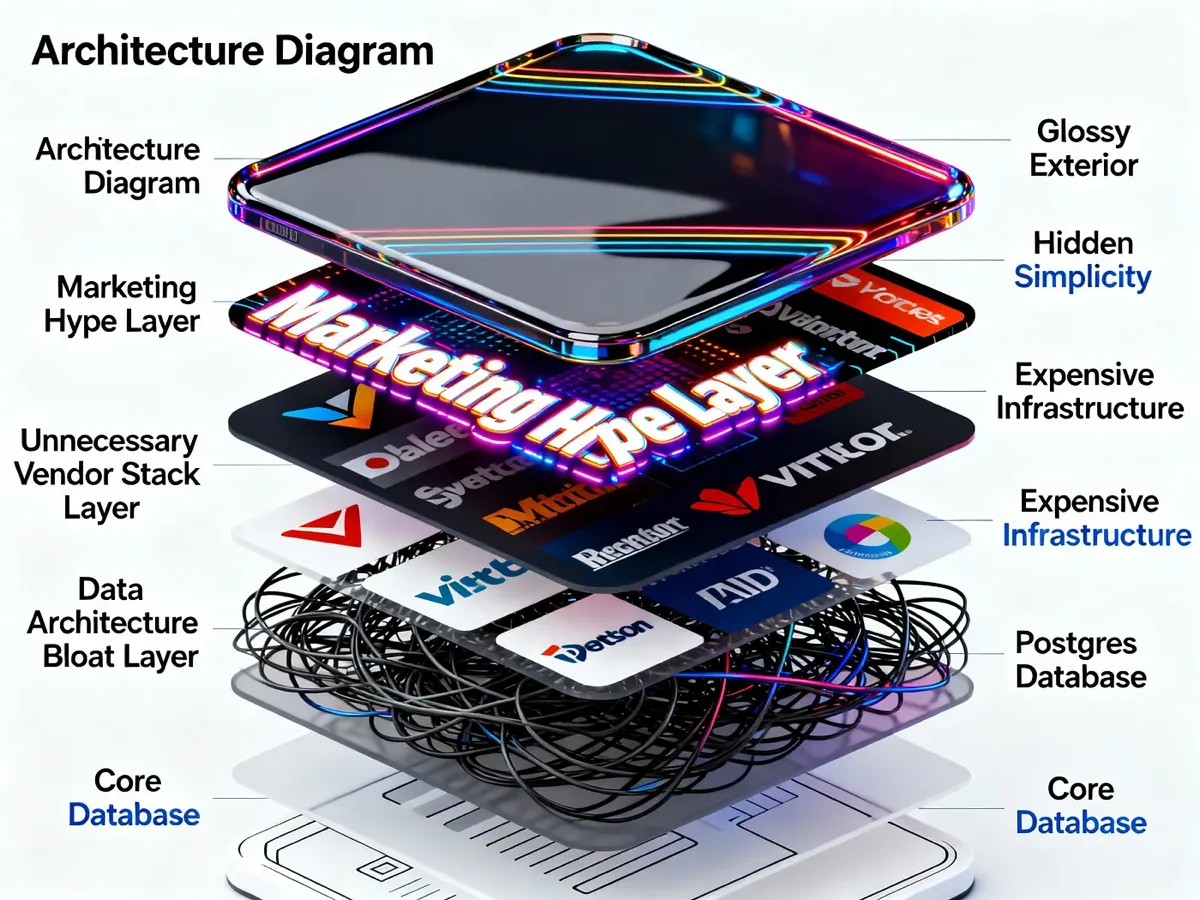
We spent two years building what marketing calls “The Future of Data Architecture.” It’s a database with more vendors.
Last year, our data architecture looked like this:
- Data Warehouse : Snowflake ($200K/year)
- Data Lake : S3 buckets ($50K/year)
- Problem : Data in two places
So naturally, we did what any rational company would do. We spent $2M building a “lakehouse” to solve the problem of having two systems by… creating a third system that pretends to be both.
Investment : $2M over 18 months Performance improvement : -30% (yes, negative) Complexity added : 10x Problems solved : Zero New problems created : 47 What it actually is : PostgreSQL would have been fine
The data lakehouse is the greatest marketing achievement in data history. Convince companies that instead of fixing their mess, they need a NEW mess that combines both previous messes. Genius.
The $2M Journey to Nowhere
Year 1: The Promise ($800K)
Vendor pitch : “Unified architecture! Best of both worlds! Single source of truth!” Reality : Needed 6 different technologies to make one “unified” system
What we bought :
- Databricks licenses: $300K/year
- Delta Lake implementation: $200K consulting
- Apache Iceberg “just in case”: $100K consulting
- AWS infrastructure: $150K/year
- Monitoring tools: $50K/year
Year 2: The Reality ($1.2M)
What actually happened : Everything got worse
Additional costs :
- Performance consultants: $300K (to fix what we broke)
- Data engineers: 3 × $200K = $600K (to maintain the monster)
- Migration tools: $100K
- Therapy for the team: Priceless
- Executive who championed this: Promoted (failed upward)
The Architecture That Nobody Understands
Here’s our “simple, unified” lakehouse architecture:
Raw Data → S3 Buckets → Delta Lake → Spark Processing →
→ Metadata Layer → Catalog Service → Query Engine →
→ Another Processing Layer → Cache Layer →
→ Finally Your Query Results (Maybe, If Lucky)
Components involved : 14 Points of failure : 14 People who understand it all : 0 Time to query data : 3x longer than before
Compare to what we actually needed:
Data → PostgreSQL → QueryComponents : 1 Points of failure : 1 People who understand it : Everyone Time to query : Milliseconds
The Three Lies of Lakehouse Architecture
Lie #1: “It Combines the Best of Both Worlds”
Reality : It combines the COMPLEXITY of both worlds
From Data Lakes, we got :
- Unstructured mess ✓
- Schema-on-read confusion ✓
- “Data swamp” potential ✓
From Data Warehouses, we got :
- High costs ✓
- Rigid structure requirements ✓
- Performance expectations we can’t meet ✓
What we didn’t get :
- Simplicity from either
- Performance from either
- Cost savings from either
Lie #2: “It’s a Single System”
Reality : It’s 15 systems pretending to be one
Our “single” lakehouse uses:
- Object storage (S3)
- Table format (Delta Lake)
- Catalog (AWS Glue)
- Processing engine (Spark)
- Query engine (Presto)
- Metadata store (Hive Metastore)
- Orchestration (Airflow)
- Monitoring (Datadog)
- Security layer (Ranger)
- Caching layer (Alluxio)
- Feature store (Feast)
- ML platform (MLflow)
- Notebook environment (Databricks)
- Version control (Git)
- Another database for small data (Postgres)
“Single system” my ass.
Lie #3: “It Eliminates Data Movement”
Reality : We move MORE data than ever
Before lakehouse :
- ETL from source to warehouse
- Done
After lakehouse :
- Land in Bronze layer
- Process to Silver layer
- Transform to Gold layer
- Cache frequently accessed
- Materialize for performance
- Copy to feature store
- Sync to various engines
- Backup everything
We went from 2 data movements to 8. Progress!
The Performance Disaster Nobody Admits
Real benchmark from our lakehouse:
Simple Query: “SELECT COUNT(*) FROM customers”
PostgreSQL : 15ms Our old Snowflake : 200ms Our new Lakehouse : 3.2 seconds
Why so slow?
- Read metadata from catalog (500ms)
- Query optimizer thinks (800ms)
- Spin up Spark executors (1s)
- Read from S3 (500ms)
- Process through 3 layers (400ms)
- Return results (finally)
Complex Analytics Query:
Old Snowflake : 30 seconds New Lakehouse : 4 minutes PostgreSQL with proper indexes : 8 seconds
But hey, at least it’s “unified”!
The Format Wars That Waste Millions
Can’t have a lakehouse without choosing a table format! Your options:
Delta Lake (Databricks)
- Pros: Works with Databricks
- Cons: Vendor lock-in, everything else
- Cost: Your soul
Apache Iceberg (Netflix)
- Pros: “Open” standard
- Cons: 47 different implementations, none compatible
- Cost: Endless consulting
Apache Hudi (Uber)
- Pros: Nobody uses it so you’ll be unique
- Cons: Nobody uses it
- Cost: Your sanity
We spent 3 months evaluating formats. Then picked Delta because our consultant had a relationship with Databricks. Could have flipped a coin.
The Real Problems Lakehouse Was Supposed to Solve
Problem: “Data in multiple places”
Lakehouse solution : Put it in a NEW place that pretends to be both places Actual solution : Pick one place
Problem: “Can’t do ML on warehouse”
Lakehouse solution : Complex ML platform integration Actual solution : Export to Python, done
Problem: “Can’t do BI on lake”
Lakehouse solution : 14-layer query engine Actual solution : Don’t do BI on lakes
Problem: “Too expensive”
Lakehouse solution : Spend more to save money (???) Actual solution : Use PostgreSQL
The Governance Nightmare
Lakehouse promised “unified governance.” What we got:
Access Control Chaos:
- S3 IAM policies
- Delta Lake permissions
- Catalog permissions
- Spark ACLs
- Query engine controls
- Application-level security
Total permission systems : 6 Conflicts between them : Constant People who understand it all : 0 Security breaches : Don’t ask
Data Quality Theater:
Before: “Some data is bad” After: “We don’t know which layer the bad data is in”
Is the problem in:
- Bronze layer? (raw)
- Silver layer? (cleaned)
- Gold layer? (aggregated)
- The transformations between them?
- The catalog metadata?
- The query engine interpretation?
- All of the above? (Usually)
The Cost Explosion Nobody Talks About
What vendors show you:
“Save 90% over traditional warehouses!”
What actually happens:
Storage (seems cheap):
- S3: $0.023 per GB/month
- For 10TB: $230/month
- Bargain!
But then add :
- Compute for queries: $5K/month (Spark clusters)
- Databricks platform: $25K/month
- Data transfer: $2K/month
- Metadata operations: $1K/month
- Format conversions: $3K/month
- Caching layer: $2K/month
- Backup and replication: $3K/month
- Monitoring: $2K/month
- Engineers to manage it: $50K/month
Total : $93,230/month PostgreSQL on a big box : $5K/month Savings : -$88,230/month (negative savings!)
The Skills Gap That Bankrupts Teams
To run a lakehouse, you need people who understand:
- Distributed systems (Spark)
- Object storage (S3)
- Table formats (Delta/Iceberg/Hudi)
- Query engines (Presto/Trino)
- Catalogs (Glue/Unity)
- SQL (obviously)
- Python (for processing)
- Scala (for Spark)
- YAML (for configs)
- Cloud architecture (everything)
- Performance tuning (constantly)
- Cost optimization (desperately)
People with all these skills : Don’t exist Cost if they did exist : $500K/year What PostgreSQL needs : One decent DBA
The Migration Hell
Moving to lakehouse was supposed to be easy. Reality:
Phase 1: “Simple Migration” (6 months)
- Export from warehouse
- Import to lake
- Discover nothing works
- Panic
Phase 2: “Fixing Issues” (6 months)
- Schema conflicts everywhere
- Data type mismatches
- Performance disasters
- More panic
Phase 3: “Optimization” (∞ months)
- Still ongoing
- Will never end
- Consultants’ kids’ college funds secured
- Acceptance of fate
Data migrated successfully : 60% Data accessible in new system : 40% Data actually used : 5% ROI : Negative infinity
What We Should Have Done
Here’s the shocking secret: Most companies just need PostgreSQL.
Our actual data:
- Size: 2TB (not petabytes)
- Users: 50 (not thousands)
- Queries: 1,000/day (not millions)
- Growth rate: 10GB/month (not TB/day)
PostgreSQL could handle this:
- Cost: $5K/month for beefy server
- Performance: Sub-second queries
- Complexity: None
- Skills needed: Basic SQL
- Time to implement: 1 week
But we chose lakehouse because:
- “Everyone’s doing it”
- “It’s the future”
- “We might need scale”
- “AI readiness” (we don’t do AI)
- Consultants said so ($$$)
The Conversations That Killed Our Lakehouse
With the CEO:
CEO : “Why is the lakehouse so slow?” Me : “It’s processing through multiple layers — “ CEO : “The old system was faster.” Me : “But this is unified — “ CEO : “Unified crap is still crap.”
With the CFO:
CFO : “We’re spending HOW MUCH?” Me : “$100K per month.” CFO : “Didn’t this replace two systems?” Me : “Yes…” CFO : “Why does it cost more than both combined?” Me : “Modern architecture — “ CFO : “Modern bankruptcy more like it.”
With Engineers:
Engineer : “I just want to query data.” Me : “First, understand these 5 table formats — “ Engineer : “I’m going back to Excel.” Everyone : “Wait, take us with you!”
The Vendor Industrial Complex
The lakehouse ecosystem is a vendor’s dream:
Databricks:
“You need our platform!” ($300K/year)
Snowflake:
“Actually, we’re a lakehouse too now!” (Still $200K/year)
AWS:
“Use our 47 services to build your own!” ($150K/year minimum)
Consultants:
“You’re doing it wrong, hire us!” ($2K/day per consultant)
Training Companies:
“Your team needs certification!” ($5K per person)
Conference Organizers:
“Learn about lakehouse at our summit!” ($3K per ticket)
Total ecosystem extraction : $1M+ per year Value delivered : Database functionality What PostgreSQL costs : $60K/year all-in
The Truth About Your Data Needs
99% of companies:
- Don’t have petabytes
- Don’t need real-time streaming
- Don’t do complex ML
- Don’t have data scientists waiting
- Don’t need 15 processing layers
What they actually need:
- A database
- That works
- With backups
- And decent performance
- That people understand
Guess what provides all that? PostgreSQL.
The Liberation: Going Back to Boring
We’re dismantling our lakehouse:
Step 1: Accept Reality
- We’re not Google
- We don’t have Google problems
- We don’t need Google solutions
Step 2: Migrate to PostgreSQL
- Set up read replicas
- Add proper indexes
- Use partitioning for large tables
- Done
Step 3: Cancel Everything
- Databricks ✓
- Spark clusters ✓
- Consultants ✓
- Training programs ✓
- Conference attendance ✓
Results So Far:
- Costs down 90%
- Performance up 3x
- Complexity down 95%
- Team happiness up 1000%
- Data accessibility: Actually better
The Call to Sanity
Before building a lakehouse, ask:
- Do you have more than 10TB of active data? (Not archived)
- Do you process more than 1M queries/day?
- Do you have 100+ concurrent users?
- Is your data doubling every month?
- Do you actually do ML in production?
If you answered “no” to ANY of these: You don’t need a lakehouse.
What you need:
- PostgreSQL (or MySQL, or even SQLite)
- Good indexes
- Decent hardware
- Basic backups
- Someone who knows SQL
Total cost: <$10K/month Total complexity: Minimal Total time arguing about table formats: Zero
The Final Verdict
The data lakehouse is a solution in search of a problem. It’s vendors convincing you that your simple needs require complex solutions. It’s consultants selling you architecture astronautics. It’s resume-driven development at its worst.
Data Lakes failed because they became swamps Data Warehouses “failed” because vendors priced them insanely Data Lakehouses fail because they’re both failures combined
The real winner? Boring databases that just work.
Currently migrating our $2M lakehouse back to PostgreSQL. It’ll take 3 months to undo 2 years of complexity. The database will cost $5K/month, handle all our needs, and everyone will understand it. The lakehouse vendors are calling desperately. We’re not answering.
P.S. — “But what about when you need to scale?” We won’t. 99% of companies never hit the scale where PostgreSQL fails. We’ll worry about it if we become Google. Spoiler: We won’t become Google.
P.P.S. — The executive who pushed for lakehouse? He’s at another company now, building another lakehouse. The cycle of complexity continues. His new title? “Chief Data Lakehouse Officer.” I’m not making this up.
Related articles
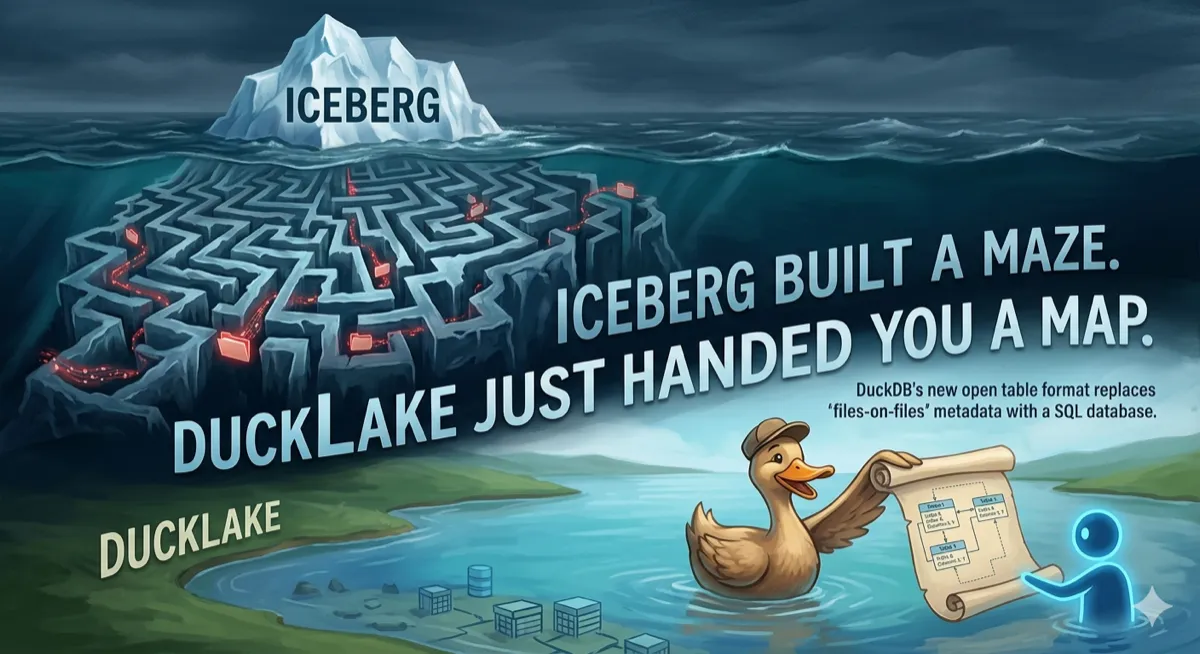
- Iceberg Built a Maze. DuckLake Just Handed You a Map. — a simpler alternative to the open table format complexity
- The Database Endgame — where all database architectures are converging
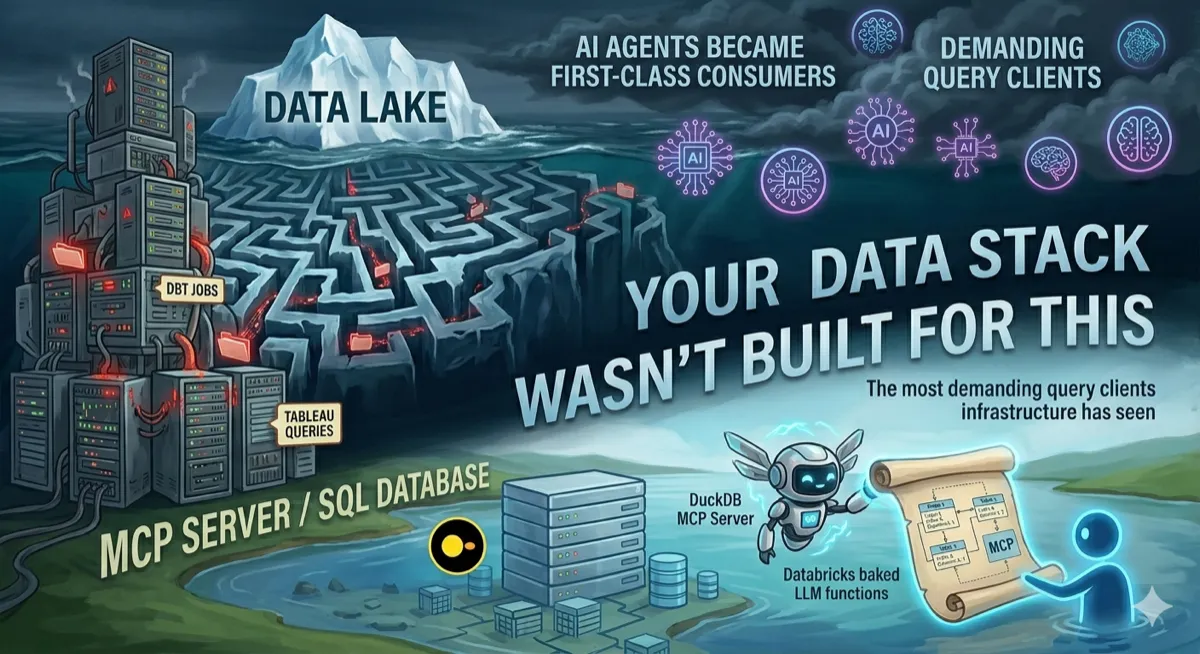
- Your Data Stack Wasn’t Built for This — when AI agents make you rethink your architecture
- The Last Generation of Data Engineers? — what happens to the lakehouse era
If you want to understand why simple beats complex, Fundamentals of Data Engineering covers the entire data lifecycle without the vendor hype. And The Data Warehouse Toolkit proves that Kimball’s dimensional modeling from 1996 still works better than most “modern” approaches.
Comments
Loading comments...